
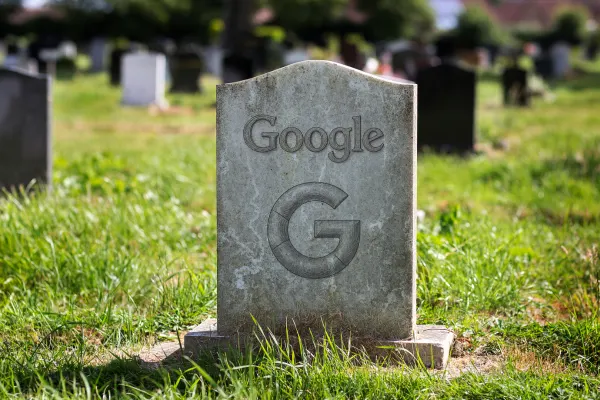
For two years, every conversation about AI and search has been a funeral. The answer sits at the top of the page, the click never happens, your traffic shrinks while you're doing nothing wrong. If you live on Google, you've felt it. And every think-piece has patted you on the back and confirmed the gloom.
There's been two things that surfaced this month that made me (re?)consider my opinion, and neither got a fraction of the attention the doom stories did.
First, a number, that gets flung around with no context. "Visitors who arrive from AI search convert at roughly 4.4 times the rate of people from normal organic search". It's not a new stat, it goes back to a Semrush study from June last year, but it keeps holding up, and Shopify's own data found AI-referred shoppers outconverting organic in 23 of 25 product categories. But, is it relevant? No, not really - it's a massive multiple on a tiny base. AI referrals are still about 1% of most sites' traffic. So anyone selling you 4.4x without that second sentence is selling you something.
But the reason behind it is what matters, and it's plumbing, not hype. Ask ChatGPT or Gemini a question and it pulls from a handful of sources, then hands back one answer. By the time someone clicks through to you, you've already survived that cut. The model vetted you, shortlisted you, half-closed the sale. The person landing on your site arrives pre-qualified, further down the path to buying than any keyword click ever brought them.
I'll be straight, we've only just started splitting AI referrals out properly in our clients' analytics, so I'm going off the public data here rather than a pile of our own numbers yet. Ask me again in a few months. But it's consistent enough, across enough separate sources, that I'd bet on the pattern before I'd bet against it.
Set that against the funeral and the whole thing turns over. Yes, AI took clicks. But look at which clicks. It took the tyre-kickers, the bouncers, the volume that made your dashboard look busy and your sales team scratch their heads. What's left is fewer visits made of better people. For an ecommerce brand that isn't a loss. It's a filter you didn't have to build.
Second thing, and this one's a first. Word got out this month that Google's started paying publishers when their content shapes an AI answer. Invite-only, amounts reportedly tiny, the maths on it is still a total black box, publishers can't even see which pages earned. One of them called the payouts peanuts next to ad revenue, and fair enough. But underneath the mess, something real happened. Google just admitted, with money, that your content has worth even when nobody clicks it. Two years of "AI takes your work and gives nothing back," and there's the first crack in it.
I'm not going to pretend either fixes the traffic hole. The payouts are tokens. The AI volumes are still small. If your whole model ran on cheap organic clicks, you've got a rough year coming regardless. But the direction is the point, and both stories aim the same way: toward a web where getting cited by an AI beats getting ranked by a search engine, and where a page's worth stops being counted only in the visits it sends you.
Which changes what we tell clients. For ages the advice was defensive, guard your rankings, watch the traffic bleed. Now it's something you can actually act on. Get your brand into the sources these models pull from. Structure your content so an AI can lift it clean. Split out AI referrals in GA4 so you can see the 4.4x in your own numbers instead of trusting mine. Treat a citation as a conversion worth chasing, because on the evidence so far, it is one.
The funeral was early. Something's being built in the same motion the old thing's falling apart, and the brands watching closely get a say in the shape of it.